


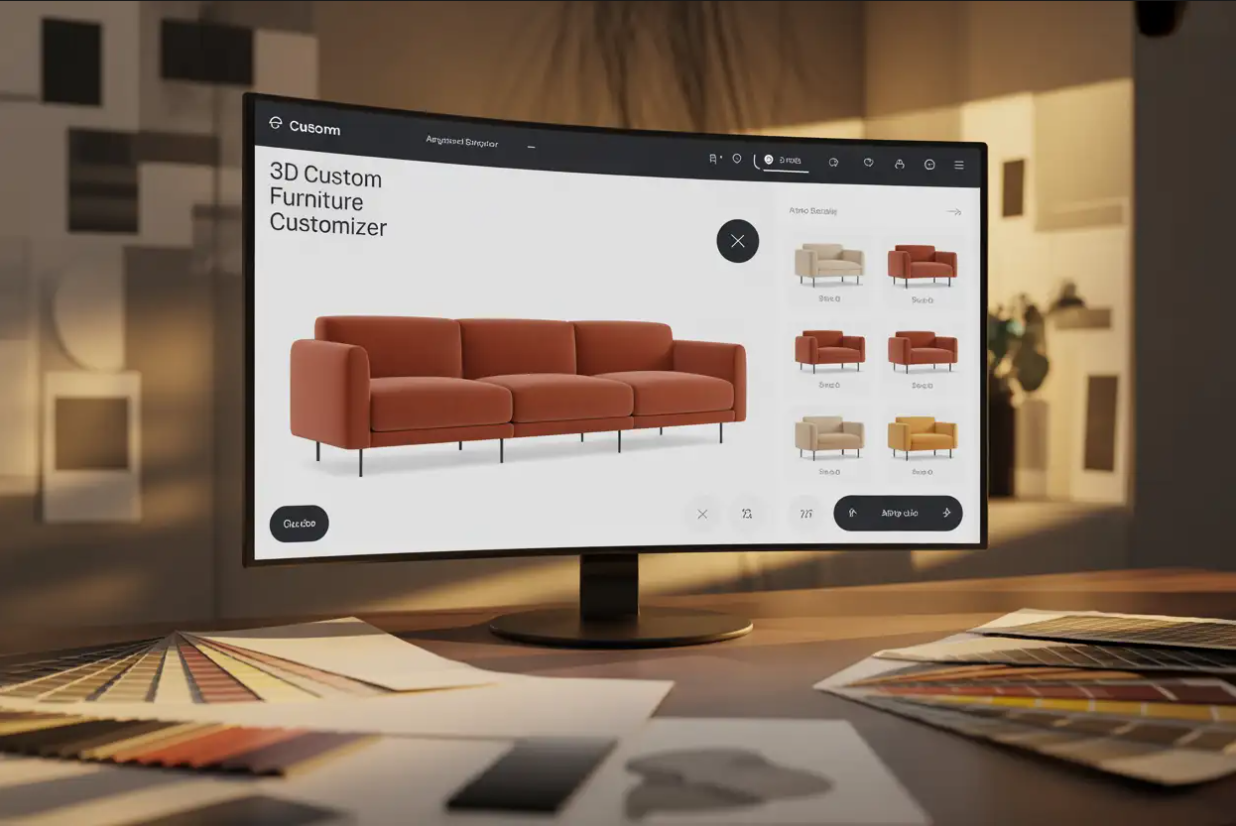
Shopping for furniture used to mean a long afternoon in showrooms, with a measuring tape, trying to imagine whether that chair or dining set would actually fit the place or your personal style. The rise of e-commerce promised convenience, but for furniture, it often brought frustration. Product pictures that cannot move and descriptions that are general hardly captures how a piece should look like in a real home. Shoppers end up second guessing themselves, abandoning carts and also making returns that are quite expensive.
With all this, 3D furniture software step in. It is more than just a sleek add-on, they are becoming an important breach between the physical showroom and the digital store. When giving customers the ability to customize, visualize, and interact in real world, the configurator changes online shopping from guessing to boldness. For retailers, it means less returns, stronger customer engagement and a shopping experience that feels personally connected.
The furniture industry is already changing and evolving. Customers now have clarity, choice and control and only retailers who deliver it will define the future of furniture shopping.
The Problem With Traditional Online Furniture Shopping
Future shopping is an emotional connection . A sofa is not just a sofa, it is where family gathers and a dining table isn’t just wood, it is a place where people sit to bond over food. But the digital shift has not always captured this intimacy.
Most online furnitures stores still depend on stagnant products photos, maybe a little bit of angle shown, and the list of specifications that only few shoppers read
This leaves customers with unanswered questions like:
Will that couch actually fit in my living room?
What does that oak finish look like a natural light?
Will this style clash with my other furniture?
These uncertainties caused delay, cats abandoned and the high rate of returns which is costly for retailers and frustrating for buyers. A recent survey reviewed that up to 63% of furniture shoppers do not purchase online immediately because they cannot properly visualize products in their space. Another industry statistics shows that furniture return costs us retailers over 50 billion dollars annually, due to size, color or when their expectations don’t match what was delivered.
It is not that customers don’t want to buy online, they don’t just trust what they see enough to commit to it. In a category where items are bulky, expensive and tied deeply to lifestyle, boldness is everything.
This is the gap 3D furniture configurators are designed to fill.
Instead of scrolling through stagnant galleries, customers can rotate a chair at 360 degrees, change a fabric, test color combinations, and even visualize pieces inside a digital replica of their own room. This makes the guessing go away and replaced by interactive control.
For the first time, online furniture shopping doesn’t just show, it allows shoppers to experience and live it even without purchase.
What Exactly is a 3D Furniture Configurator
A 3D furniture configurator simply means a tool that is engaging and allows shoppers to see, customize, and test with furniture in reality before the purchase. You can imagine it as a digital showroom but it is smarter, faster and tailored to the customer’s choice.
Instead of an image that cannot move, the configurator generates a 3D example of the same form of the furniture and allows customers to spin around, zoom in and view from any angle of their choice. Most importantly, it allows customers to customize what they feel is right from swapping fabrics, testing different woods, changing sizes, and immediately see how those changes affect the look and feel of the product.
In most cases, Configurators go a step further with AR (Augmented Reality) integration which means buyers can drop the furniture into their own room using a phone or tablet camera. For instance, that oak coffee table can appear right in the middle of a customer’s living room at scale. This helps them build absolute assurance in that product.
For retailers, figurators are more than just a visual upgrade. They are powered by online furniture tools and 3D rendering technology that connects directly to product catalogs. This ensures that every customization is tied to real SJUs, pricing and invention which makes the customer’s journey from exploration to viewing easier.
In a simple explanation it means:
- Traditional shopping = guessing and images that are not movable
- 3D configurator shopping = Engaging, designing and clarity.
It is not just about making furniture look beautiful on shopping platforms, it’s about letting customers design it to fit their lifestyle, style, and space.
That is where the benefits come alive.
The Benefits of 3D Furniture Configurators for Customers and Retailers.
The spell that 3D furniture configurator casts on shopping shows how it transforms experiences for both sides of the transaction. Customers gain assurance in their choices, while retailers see fewer returns, increase in engagement and also stronger sales conversion. The following are other benefits of a 3D furniture configurator.
1. Assurance in every purchase:
When you buy a chair online it can feel like gambling because you wonder if it is going to fit your aesthetic or space. You contemplate on if the color will fit your curtain or if the size is not too big. A 3D configurator answers those questions immediately. A buyer can now view your furniture from different angles, swap colors and even place it in your room with AR. This process cancels all thoughts and builds trust.
2. Personalized Shopping:
Every piece of furniture is deeply intimate. With configurators, buyers browser, but also co-create. They can try out as many fabrics as possible, wood types, and leg designs in seconds. Instead of being told what is available, design what fills right to them. This kind of furniture customization was kept for high boutiques, but online Configurators now bring it to everyone.
3. A Winning Position:
In today’s overpopulated online marketplace, retailers need tools that go beyond stagnant photos. Offering an interactive 3D experience shows innovation and customer first thinking. For furniture retailers and e-commerce businesses, it is about creating impact, more engaging experiences that customers cannot easily replace.
4. Less returns, less headaches:
Returns at the hidden disaster of online furniture sales. A child that looked perfect in a product photo and is returned by the customers might not be purchased because no one might be interested in the furniture at the moment. By showing shoppers exactly what they will get, configurators help to cut down on surprises and by extension on returns that are costly.
5. Stronger sales conversion rates
When customers see products in detail, and design them to fit their lifestyle, they are more likely to hit the buy button. Configurators help to reduce doubt, shutting decision cycles, and turning browsers into buyers. In most studies, engaging 3D tools have boosted sales conversion rates by double digits.
6. Building long-term loyalty:
Beyond the immediate sales, configurators create a sense of involvement. Customers don’t just purchase a sofa, they build a sofa. That emotional connection turns into brand loyalty which is something every retailer fights to keep.
In simple terms, 3D furniture configurators are not just gimmicks. They are practical tools that are receiving the future of furniture shopping reducing stress for customers and also creating measurable wins for retailers.
How 3D Configurators Work
A 3D configurator may look like magic to a user but behind them, it combines visualization technology, real tender, and smart integration to create a simple shipping experience. At its core, the configurator is an engaging 3D model of a furniture piece, so instead of looking at a flat photo, customers can move, zoom and examine the product as if it were physically in front of them.
The process starts with an accurate 3D example. Furniture retailers or manufacturers provide CAD files, shapes and design specs, which are converted into photorealistic examples. These examples are then powered by WebGL or a similar technology that runs directly in a web browser without the need for any extra software. This ensures that no matter the device a shopper is using (phone, tablet or monitor), the configurator loads very fast and works without interruption.
The real amazing part is that this happens with customization. Customers are not just looking at a sofa, they can change the color from beige to teal, or swap wooden legs for metallic ones in real life. Every change reflects immediately, giving shoppers full creative control. This cancels guessing and increases assurance because they know exactly what the furniture will look like in their homes before buying.
On the backend, the configurator is connected to inventory management and e-commerce platforms. That means if a particular fabric or finish is not available, the system automatically limits the option to prevent expenses errors. Some advanced configurators are even attached with Augmented Reality (AR), which lets customers project their customized furniture into their living room through their mobile phone camera.
For retailers, the benefits are very mighty. They can reduce return (since customers know what they are getting), increase order accuracy, and collect important and vital data on which shopping experience or furniture they prefer.
With time, this data helps businesses see which style, materials, or colors are very popular. This informs them on the design, production and marketing decision to take next.
A 3D furniture configurator works by blending visualization, design and integration. For customers, this is clarity and freedom, while for retailers, it is effectiveness and insight.
Real World Application of 3D Furniture Configurators
3D furniture configurators are not just sleek tools for tech blogs, they are already shaping the way most furniture retailers sell. Brands like IKEA, Wayfair, and Ashley Furniture have proven that when customers can engage with products online, sales conversion increases and return rates fall.
Take IKEA’s online platform as an example, their use of interactive 3D visualization and AR tools tell shoppers to design custom storage units or sofas, then place them virtually in their homes. Customers do not only see the scale and design, but also personalize every detail before purchasing. Distance reduces uncertainty which is one of the biggest reasons customers abandon their online carts when shopping for furniture.
Small retailers are also making use of configurators to compete with global companies. Independent furniture stores can now offer online customization without the need for huge tech budgets, a big thank you to SaaS based 3D configurator services.
These tools help them become big beyond their showrooms, reaching customers who might never physically visit their store but still want the personal touch of custom furniture.
Interior designers are another group that are benefiting from this shift. Instead of showing stagnant mood boards, they use a configurator to collaborate with clients in reality. A client can change sofa fabrics or table finishes during a video call which makes the design process faster and more engaging.
The impact is obvious, configurators reduce returns by matching expectations with reality, speed up decision making by removing guesses and drive higher sales because customers enjoy the experience of co-creating their purchase. In a crowded eCommerce space, these are not just beautiful scenes, they are what makes you different and unique.
Frequently Asked Questions: 3D Furniture Configurators
1. How do 3D configurators improve online shopping?
They remove guesses. Instead of relying on stagnant photos, customers interact with furniture in 3D by moving, zooming and designing until it feels right. This helps build assurance and reduce cart abandonment.
2. Do customers really use these tools or are they just gimmicks?
Studies show that configurators increase engagement time and also boost conversion rate by double digits. Customers are not just using them, they expect this level of engagement when making big ticket purchases offline.
3. What about smaller furniture retailers? Are configurators not too expensive?
They are no longer expensive.Cloud-based solutions mean even small or mid-sized retailers can use configurators without expensive upfront payment.b many platforms move up with business needs which makes them very affordable at entry point.
4. Can configurators reduce product returns?
Yes they can. By letting customers see various dimensions, finishes and colors in detail, configurators match expectations with reality.
5. Do I need AR/VR to make it work?
Not necessarily. While AR and VR makes the experience worthwhile, web based 3D configurators already deliver most benefits. Retailers can start small then expand into AR/VR if their audience wants it.
Furniture shopping has shifted from stagnant catalogs to interactive experiences. A 3D furniture configurator is not just another online tool, it is the way between curiosity and purchase.
The question isn’t if customers can adapt to 3D configurators, they already are.
The real question is how fast are retailers willing to embrace this change. Those who move now will change the market, while those who wait will risk relevance.
11 Comments
Pingback: online viagra
Pingback: diflucan medication
Pingback: sertraline hydrochloride
Pingback: tadalafil near me
Pingback: agv viagra cost
Pingback: doxycycline dosage for bv
Pingback: acyclovir cream vs ointment
Pingback: terbinafine side effects hub
Pingback: ivermectin larval stage activity
Pingback: ivermectin safety evidence
Pingback: minoxidil men’s pk overview