


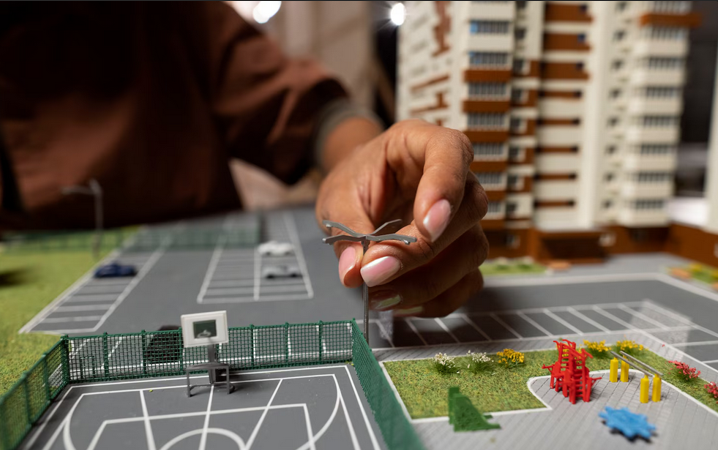
Buildings and spaces today do not follow one fixed direction anymore. Everything feels like it is shifting slowly but constantly in different directions. People build things faster now but also expect them to last longer than before. That creates a strange balance between speed and durability that is not always easy to manage. Designers often adjust ideas mid-way through projects instead of sticking to one rigid plan. This leads to outcomes that feel slightly uneven but more realistic in actual use. Real environments rarely match perfect drawings anyway.
Changing Space Priorities Today
Space usage has changed a lot in recent years and continues changing quietly. People now care more about usability than just visual appeal alone. Rooms are expected to serve multiple functions without feeling crowded or confusing. This shift influences both small homes and large buildings in similar ways. Designers tend to think more about how people move rather than just how spaces look.
In many discussions around modern building trends, arcticacture and design is used loosely to describe this blend of structure and lifestyle thinking. It is not treated as a strict discipline but more like an evolving practice. Some projects prioritize flexibility while others focus on permanence depending on need. That variation makes the industry less predictable but more adaptable overall.
Even furniture placement is now considered part of the bigger spatial plan. Nothing is treated as isolated anymore within a building layout. Every element connects to how users interact daily inside that environment.
Material Behavior And Usage
Materials used in construction are not chosen in the same way they used to be. Builders test more options before making final decisions on site. Strength, cost, and availability all play roles that are weighed carefully together. Sometimes choices change midway due to unexpected supply or environmental conditions.
Recycled materials are becoming more common in both small and large scale projects. This reduces waste while also improving long term sustainability outcomes. Even older buildings are being updated using modern material techniques. That creates a mix of old structure with new efficiency improvements.
The way materials behave under pressure or heat is studied more closely now. Engineers often adjust designs based on how materials respond in real conditions. This reduces failures and improves long term safety in many structures.
Urban Expansion Challenges
Cities are expanding faster than infrastructure planning can always keep up with. This creates pressure on roads, housing, and public services in many regions. Planners try to predict growth patterns but real movement often surprises expectations. That mismatch leads to frequent adjustments in development strategies.
Public spaces are also being redesigned to handle larger and more diverse populations. Parks, transport hubs, and residential zones are all being optimized together. Nothing is planned in isolation anymore at the city level. Everything connects through shared systems and usage demands.
Population density changes how space is allocated across urban zones. Some areas become highly compressed while others expand outward rapidly. This uneven development creates both opportunities and challenges for planners and builders.
Interior Function Planning
Interior layouts are now focused heavily on flexibility and practical usage. People want spaces that can adapt quickly to changing needs. A single room might serve as office, storage, or relaxation area depending on time. That level of adaptability was not common in earlier design approaches.
Storage is often integrated into hidden or unused areas of the structure. Walls, staircases, and corners are now used more efficiently than before. This helps reduce clutter while improving movement inside living spaces.
Lighting design also plays a major role in shaping interior comfort. Natural light is preferred whenever possible, but artificial systems are carefully adjusted to feel softer. The goal is to create environments that feel balanced rather than overly bright or dark.
Practical Construction Flow
Construction processes today involve more coordination between multiple teams than in the past. Delays can happen easily due to weather, supply chains, or labor changes. This requires constant adjustment during active building phases.
On-site decisions often matter as much as initial planning documents. Workers and supervisors frequently modify small details to keep progress steady. This flexibility helps reduce long delays but also requires strong communication between teams.
Modern tools help track progress and identify problems earlier than before. However, human experience still plays a critical role in solving unexpected issues. Machines can assist but cannot fully replace practical judgment during construction work.
Environmental Awareness Growth
Environmental concerns are now deeply connected with construction and design decisions. Every project is expected to consider long term impact on resources and energy usage. This includes water consumption, material sourcing, and overall building efficiency.
Energy saving systems are being integrated into both new and existing structures. Insulation, ventilation, and natural airflow are carefully designed for better performance. These improvements may seem small individually but create large effects over time.
Even in larger planning discussions, arcticacture and design appears when sustainability is evaluated alongside structural creativity. The focus is not only on building something strong but also something responsible. That combination is becoming more important across different regions.
Digital Planning Influence
Digital tools have changed how planning is done from early sketches to final execution. Virtual models allow designers to test ideas before physical work begins. This reduces material waste and improves accuracy in final construction.
Different design versions can be compared instantly using software simulations. This speeds up decision-making and encourages more experimentation during early stages. Teams can explore more options without committing heavy resources immediately.
However, technology alone cannot guarantee perfect outcomes in real environments. Human input is still required to interpret results and adjust plans accordingly. The best outcomes usually come from a balance between digital analysis and practical experience.
Structural Adaptability Trends
Modern structures are increasingly built with adaptability in mind from the start. Buildings are no longer designed for a single fixed purpose in many cases. Instead, they are expected to evolve with user needs over time.
Walls, partitions, and open areas are designed to be modified without major reconstruction. This reduces long term costs while improving usability across different scenarios. Flexibility has become a core requirement rather than an optional feature.
Material systems also support this adaptability by allowing easier modifications later. That makes buildings more future-ready compared to traditional rigid designs.
Social Impact Of Design
Design decisions now influence how people interact within shared environments. Public and private spaces both affect behavior patterns in subtle ways. Seating arrangements, pathways, and lighting all contribute to user experience.
Communities respond differently to spatial design depending on cultural and local factors. What works in one region may not always work in another setting. This requires more localized thinking during planning stages.
Design is no longer just technical work but also social observation in practice. Understanding human behavior has become just as important as structural knowledge.
Future Construction Thinking
Future development trends are leaning toward smarter, simpler, and more adaptive systems. Overly complex structures are being replaced with efficient and flexible designs. This shift is happening gradually but consistently across many regions.
Automation and smart controls are also becoming more common in buildings. Temperature, lighting, and security systems can now adjust automatically based on usage patterns. These improvements increase comfort while reducing energy consumption.
In many forward-looking discussions, arcticacture and design is treated as a constantly changing field rather than a fixed discipline. That mindset helps professionals stay open to new methods and ideas. It also encourages continuous improvement instead of rigid repetition.
Conclusion
Modern construction and design practices continue evolving in unpredictable but practical ways. Flexibility, sustainability, and usability now guide most planning decisions across different environments. This shift is creating spaces that feel more aligned with real human needs rather than strict theoretical models.
In this changing landscape, profixspace.com/ represents how digital presence connects with modern structural thinking in a natural and practical way. The industry will likely keep moving toward adaptable systems that prioritize long term efficiency and comfort. Strong planning combined with real world responsiveness will remain essential for future growth. Consistent improvement and thoughtful execution will define the next phase of design development.
Read also:-