


Buying furniture used to involve a lot of guesswork. You’d flip through a catalog, picture a sofa in your mind’s eye, maybe hold a fabric swatch up against your living room wall, and hope it all came together the way you imagined. Even a trip to a showroom only got you so far, since the exact fabric, finish, or configuration you actually wanted often wasn’t sitting on the display floor. You’d order it anyway and wait, fingers crossed, for the delivery truck.
That kind of guesswork is quickly becoming a thing of the past. Furniture shopping has changed in a fairly significant way over the last few years, largely thanks to interactive 3D tools that let customers see and build exactly what they’re ordering before it ever leaves the factory. It’s a shift that’s changed not just how furniture looks online, but how confidently people shop for it in the first place.
The Old Problem With Buying Furniture Sight Unseen
Furniture is a strange category to shop for online. It’s expensive enough that people want to feel sure about their decision, but it’s also one of the most variable product types out there. A single sofa model might come in fifteen fabric colors, three leg finishes, and several size options. A dining table might be available in multiple wood stains and several length configurations. Multiply those choices together, and you end up with hundreds of possible combinations for what looks, at first glance, like a single product.
Traditional photography was never built to handle that kind of variety. A retailer simply can’t photograph every possible fabric-and-finish combination for every piece in their catalog. It’s too expensive and too time-consuming, so most furniture sites end up showing a handful of “hero” combinations and leaving customers to imagine how their preferred version might look. That gap between what people imagined and what actually showed up at their door was, for a long time, one of the biggest sources of frustration in furniture shopping.
Building the Piece Yourself, Before You Buy It
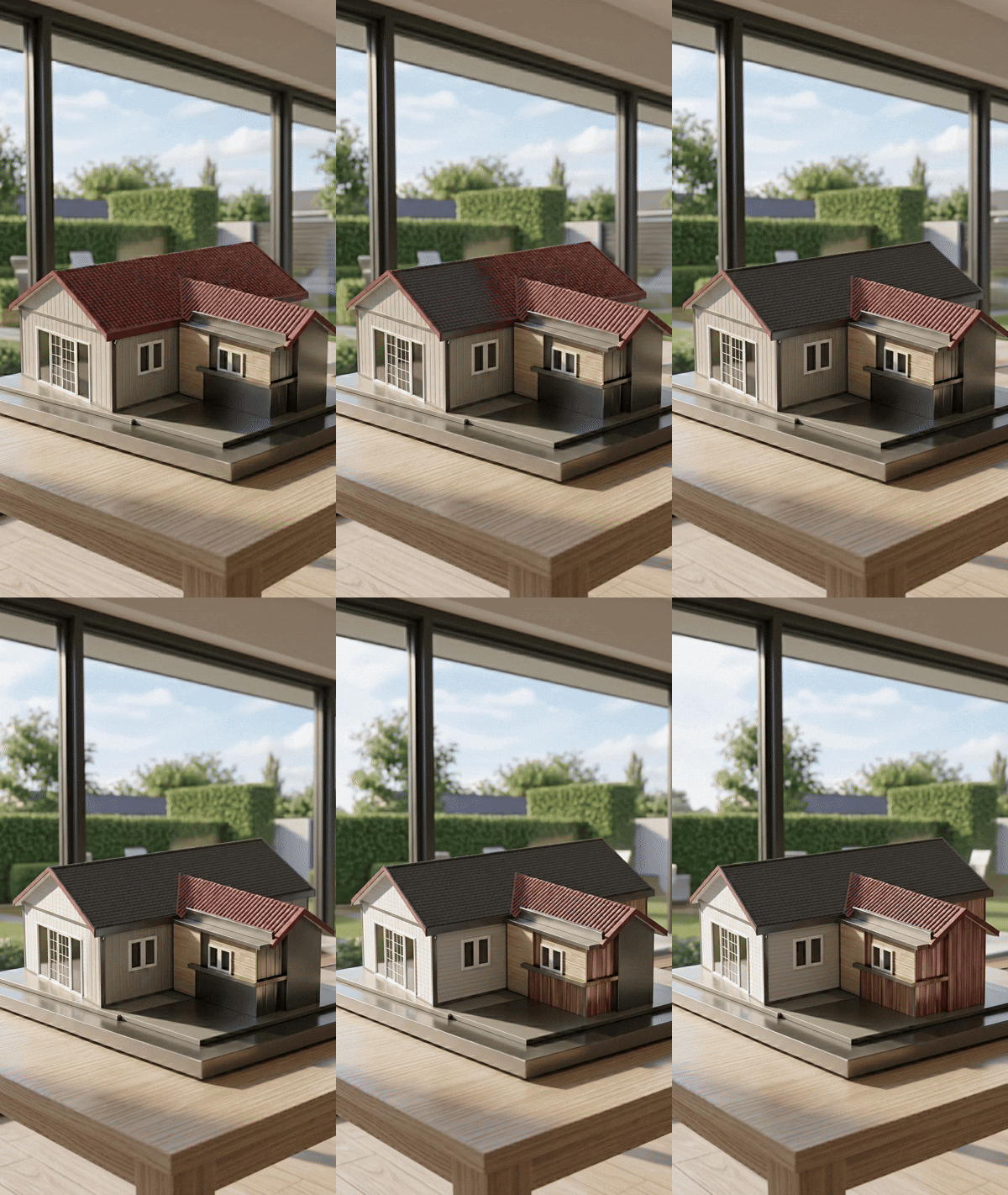
This is where the 3d configurator has made such a noticeable difference. Instead of scrolling through a limited set of preset photos, customers can now select their own fabric, finish, and dimensions, and watch the product update instantly on screen. Want to see how that sectional looks in a deep emerald velvet instead of the beige shown in the main photo? Just select it, and the model updates right there in front of you.
This changes the shopping experience in a pretty fundamental way. Instead of passively looking at pictures someone else chose to take, you’re actively shaping the product yourself. And there’s something about that process, spending ten or fifteen minutes adjusting fabric, finish, and layout, that makes people feel far more confident about the final result. By the time you’ve finished configuring a piece exactly the way you want it, you’ve essentially already decided you want it. The configurator just confirms what you already know.
Configurators are also proving especially useful for solving one of furniture’s trickiest problems: figuring out whether something will actually fit. Adjusting dimensions and immediately seeing how a piece scales, rather than trying to interpret a size chart, makes a real difference for anyone trying to fit a new couch into an oddly shaped living room or squeeze a dining table into a smaller apartment.
Making It Look (and Feel) Real
None of this would matter much if the rendered product didn’t actually look believable, which is exactly why 3d visualization plays such a big role behind the scenes. A configurator can offer all the fabric and finish options in the world, but if the rendering looks flat or fake, people won’t trust it, and they’ll go right back to feeling uncertain about their purchase.
Good visualization has to capture the small details that actually matter to furniture buyers. A velvet fabric needs to show its characteristic sheen and softness. A matte linen option needs to look appropriately textured, not glossy or artificial. Wood finishes need to show believable grain patterns and stain tones that hold up when compared side by side. When this is done well, it goes a long way toward recreating the kind of confidence people used to only get from touching a fabric sample in a showroom.
This kind of accuracy isn’t just about aesthetics either. Furniture is heavy, bulky, and expensive to ship, which makes returns particularly costly and inconvenient for everyone involved. When customers can trust that what they see in a configurator closely matches what actually arrives, there tend to be far fewer surprises and far fewer returns triggered by fabric or color mismatches that could have been avoided with better visualization in the first place.
When Customers Want More Than Just Options
Some furniture brands have taken this a step further with what’s sometimes called a 3d customizer, which allows for a bit more creative freedom than a standard configurator. Rather than just picking from a predefined list of fabrics and finishes, customers might be able to request custom sizing for an awkward alcove, add personalized engraving to a wood piece, or mix components in combinations the brand doesn’t typically offer as a standard package.
This kind of flexibility tends to appeal most to people dealing with unusual spaces or specific design needs, someone furnishing a small nook that standard furniture sizes just don’t fit, for example, or someone who wants a dining table finished in a very particular stain to match existing pieces in their home. Building a tool that supports this level of customization is more complicated behind the scenes, since the system has to make sure custom requests are still structurally sound and actually buildable, all while giving customers the sense of freedom that drew them to the option in the first place.
Brands that pull this off well often find that these customers become some of their most loyal, simply because they’ve had a direct hand in creating something that fits their space and taste in a way that off-the-shelf furniture never quite could.
Why More Furniture Brands Are Investing in This
None of this is happening just because it looks nice on a website. Furniture brands are investing in configuration and visualization tools because they’ve seen the results firsthand. Customers who spend time actively configuring a piece tend to stay on product pages much longer than those simply scrolling past static photos, and that extra engagement usually translates into a stronger likelihood of actually completing the purchase.
Returns have historically been a major pain point in furniture retail, given how expensive and logistically complicated it is to ship large items back and forth. When customers can see an accurate, interactive preview of their exact configuration before ordering, there’s simply less room for the kind of mismatched expectations that lead to a return in the first place.
There’s also a bit of a competitive push at play here. As more furniture brands adopt these tools, shoppers start to expect them everywhere. A brand still relying only on a handful of static product photos and a basic dropdown menu can start to feel outdated next to a competitor offering a richer, more interactive way to shop, even when the furniture itself is comparable in quality.
It Takes Real Work to Get It Right
Building a good configurator isn’t a small project, especially for furniture brands with large catalogs and dozens of fabric and finish combinations for each piece. Every material needs to be modeled and rendered accurately, and that work has to be kept current as fabrics are discontinued or new finishes are introduced. If a supplier changes and a fabric option is no longer available, the digital model needs to be updated right away, or customers risk designing something they can no longer actually order.
Performance matters just as much as accuracy, particularly since so much furniture shopping now happens on phones. A configurator that looks great on a desktop but loads slowly or feels clunky on mobile is going to lose customers rather than win them over, no matter how impressive the underlying rendering technology is.
Where Furniture Shopping Is Headed
As this technology keeps improving, we’ll likely see even more furniture brands add augmented reality features that let you place a fully configured piece directly into your own room using just a phone camera, checking scale and fit before you ever place an order. For a category where “will this actually fit my space” is such a common worry, that next step feels like a fairly natural one.
At its core, though, what’s really changed isn’t just the technology itself. It’s the expectation that furniture shopping should feel less like a gamble and more like a decision you can actually see through before committing to it. For an industry that’s long struggled with the limits of static photography, giving people the ability to build, view, and trust exactly what they’re buying has turned out to be one of the more meaningful improvements furniture retail has made in years.